
Industrial furnaces must work without stopping. Day after day. Shift after shift. They deal with intense temperature, pressure and constant production demands. But most internal issues are not announced in a loud manner. They start quietly. The lining becomes weaker. Heat escapes. An imbalance may occur. That's exactly the reason Furnace Thermography is important when the health of furnaces is at risk.
Furnace Thermography Shows What Heat Is Hiding
Furnace Thermography provides maintenance personnel with the ability to "see" temperature behavior instead of guessing. The thermal images reveal irregular heating patterns, gaps in insulation as well as stressed zones that can't be detected when performing normal visual inspections.
If temperatures on the surface shift off from their normal patterns there is something going on inside. If you can detect the issue early, it will keep from lengthy interruptions later. This is why furnaces remain in good condition for years and not only for months.
Why Furnace Problems Rarely Start on the Surface
Many furnace malfunctions don't start with sparks or cracks. The cause is that heat moves into areas it is not supposed to. Refractory layers are thin. Stresses from expansion increase slowly. Operators only feel the effects when efficiency decreases or consumption increases.
Utilizing Furnace Thermo-graphy when conducting routine inspections allows you to detect these warnings of thermals in the early stages. Teams can respond with calmness instead of reacting under stress.
Training Makes Thermal Data Useful
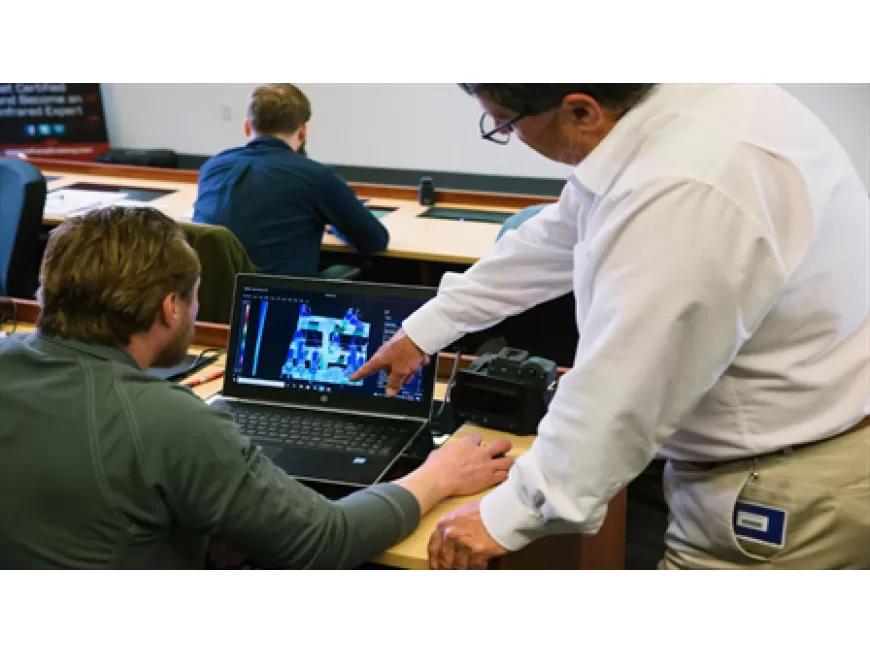
The mere presence of a thermal image does not suffice. Knowing what the image really is requires time and experience. That's why the professional experience obtained via ITC Infrared Thermography and OGI training has a crucial role to play.
A proper training program teaches the ability to identify heat patterns in a correct manner. Also, it helps to avoid incorrect conclusions triggered due to reflections or conditions on the surface. A skilled interpretation transforms images into simple decisions rather than confusion.
How Furnace Thermo-graphy Fits Preventive Maintenance
The best preventive maintenance happens in the event that it is properly well-informed. Inexperience can result in costly repairs, or even missed problems. Furnace Thermography provides real proof to the maintenance plan.
The regular scans of the system create a temperature historical record. In the event of small temperature fluctuations in the course of time, teams are able to make repairs in the proper time. This method reduces the need for emergency shutdowns and helps ensure that the production runs smoothly.
Industries That Depend on Thermal Accuracy
Cement units, steel plants and aluminum processing facilities, as well as power generation, as well as heavy manufacturing depend on the stability of furnaces. When these facilities fail, it is more expensive than repair. This is the reason Furnace Thermo-graphy can be regarded as a tool for reliability and not only an inspection technique.
Assessments of thermal properties help determine repair performance after shut downs. They can also determine if the furnace is in good condition to restart safely.
Why Expertise Still Matters Most
The technology is constantly improving, however human judgement is still crucial. Experts who are trained in ITC Infrared Thermography and OGI trainings know how operating conditions impact the behavior of thermal equipment.
The insights they provide help maintenance personnel act confidently. There is no urgency. There is no need to be anxious.
Conclusion
The health of your furnace is dependent on alertness, not some last-minute fix. Furnace Thermography gives you that first-hand understanding by showing heat behaviour before any visible damages are apparent. If you have the proper experience and proactive strategy industry can prolong the lifespan of their furnaces as well as safeguard them from damage. Pro Thermal Imaging LLC supports this by integrating advanced techniques for condition monitoring with proven analysis to help industries keep better and safer furnaces.
FAQs
1. Is thermography possible during the time that the furnace is operating?
The thermal inspections are not contact and are safe to use during operation.
2. Do furnace thermo-graphy help reduce unexpected time?
It can help find issues before they occur, and allows for scheduled maintenance to replace unexpected stoppages.
3. Do thermal results are easy to understand?
It is necessary to be trained experts to ensure accurate comprehension.
4. Can thermography be used in the aftermath of furnace repairs?
It can help determine if repairs have restored the correct heat distribution.


Write a comment ...